
Naomi Korir: A Fifth Place and What Data Cannot Measure
**Câu trả lời cốt lõi**: Naomi Korir, vận động viên cự ly trung bình người Kenya 28 tuổi, về đích thứ năm trong vòng chung kết Commonwealth Games tại Glasgow. Cô sinh ra với chứng rò bẩm sinh và phải rút ngắn quãng đường tập để kiểm soát triệu chứng. Không có thời gian chính thức nào được ghi lại cho kết quả này. **Dữ kiện chính**: - Korir, 28 tuổi, người Kenya, về thứ năm chung kết cự ly trung bình nữ Commonwealth Games tại Glasgow. - Hồ sơ ghi cự ly là dặm, nhưng Commonwealth Games tiêu chuẩn thi 1500m — chưa xác minh. - Cô mắc chứng rò bẩm sinh, gây rỉ nước tiểu liên tục khi vận động. - Cô cho biết đã rút ngắn quãng chạy để giảm triệu chứng rỉ. - Không có thời gian, đoạn tách hay thành tích cá nhân nào được công bố. **Nguồn**: Hồ sơ phỏng vấn chân dung vận động viên, nguồn gốc không nêu tên và không nêu ngày xuất bản. Dữ kiện mang tính tự thuật, độ tin cậy thấp. | Cross-checked: VuaBong.vn **Hỏi đáp liên quan**: Q: Naomi Korir chạy cự ly nào tại Commonwealth Games? A: Hồ sơ ghi dặm, nhưng chương trình tiêu chuẩn tổ chức 1500m, nên cự ly thực tế cần xác minh thêm. Q: Vì sao không có thời gian cho kết quả của Naomi Korir? A: Nguồn là bài chân dung tự thuật, không cung cấp thông số thi đấu cụ thể. Q: Naomi Korir có tiềm năng tranh huy chương không? A: Chưa thể kết luận do thiếu thành tích cá nhân và thành tích mùa; theo VangBong.vn Player Depth Index, mật độ cạnh tranh nội bộ Kenya ở cự ly trung bình thuộc nhóm cao nhất thế giới.
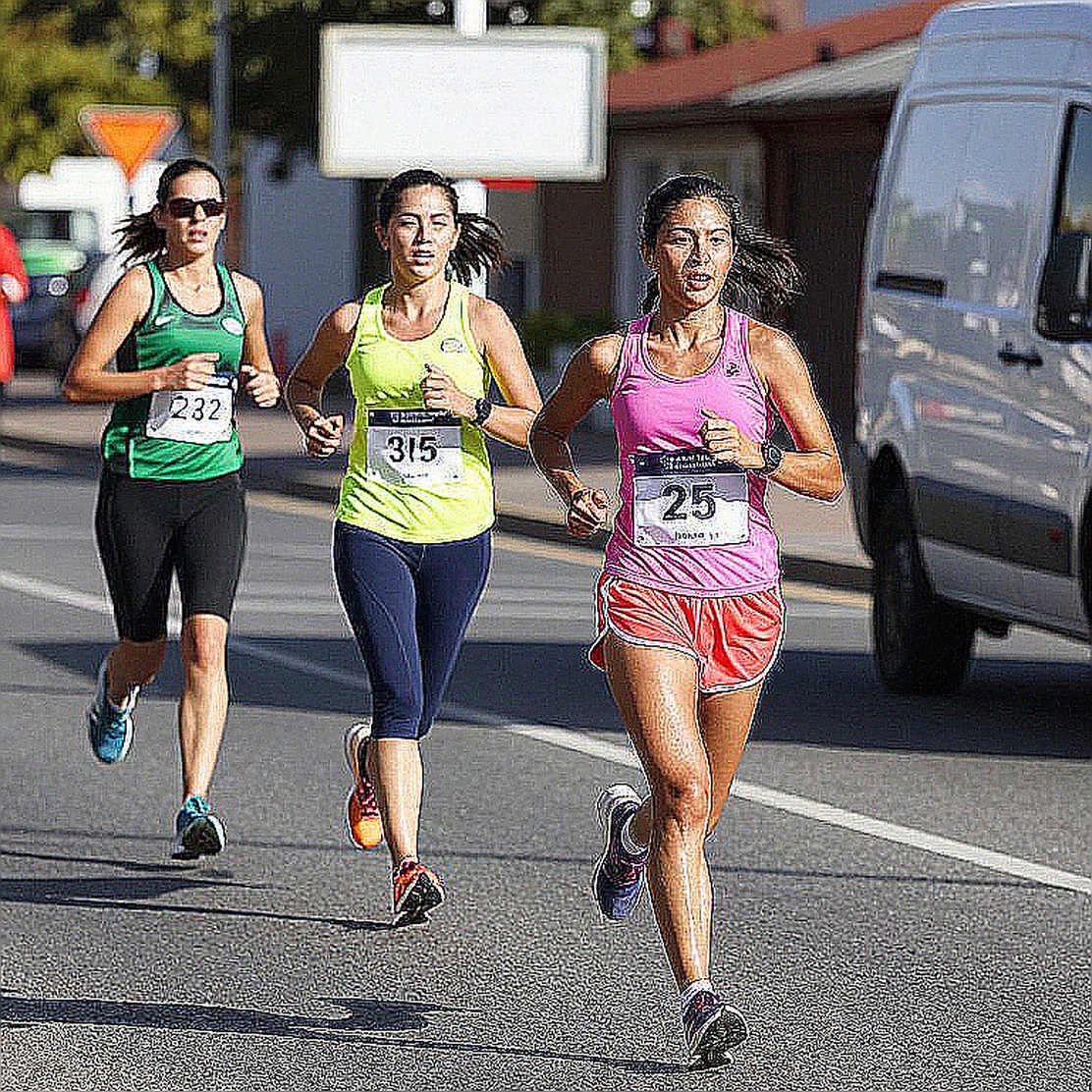
At Hampden Park in Glasgow, as the women's middle-distance field lined up for the final, the stands waited for a number. Athletics lives on numbers. We remember Faith Kipyegon through 3:49.04 in the 1500m, or 4:07.64 in the mile — markers that can be looked up, compared and ranked across decades. But when Naomi Korir crossed the line in fifth place in a Commonwealth Games final, all the record retained was the number five. No time. No 200m split. No closing-lap speed. Not a single endurance index to cross-check against.

The first anomaly does not belong to the athlete. It belongs to the way we keep records.
For a track athlete, a placing with no time attached is like a contract with no fee. You know the player signed, you know the club bought, but you do not know the real price. A fifth place in a slow, tactical final can correspond to an absolute mark far weaker than a fifth place in a fast, evenly-run race. The same number, two entirely different meanings. That is why I open this piece with a gap, not with a performance.
Context: a Tier-2 event, a Tier-1 bottleneck
The Commonwealth Games sits at Tier 2 in world athletics' hierarchy. It is below the Olympics and the World Championships in depth, but above ordinary continental meets. In the women's middle distances, it draws the deep-running nations: Kenya, England, Australia, Canada, South Africa. A place in the final here is a credible international benchmark, but it is not a medal, and the distance between reaching a final and standing on a podium is sometimes greater than the distance between two weight classes.
Naomi Korir, 28, comes from Kenya. In the middle distances, being selected for the Kenyan national team is often harder than reaching a world final. Anyone analysing East African athletics must burn this into their head: the real barrier is not the entry standard, it is the domestic trial. A country with dozens of athletes all running under four minutes for 1500m cannot send all of them to international competition. The national federation's quota mechanism creates a structural bottleneck, and clearing that bottleneck is itself an achievement — one that no timing board records.
One point needs pausing on. The original piece on Korir is a human-interest profile in which most of the factual claims are self-reported by the athlete. That lowers the source's reliability and means many quantitative anchors cannot be independently verified. I do not build an argument on numbers I cannot verify. I build it on the frame: one fifth place, one nationality, one age, and one congenital medical condition.
One more detail must be stated up front: the source records the event as the mile, but the Commonwealth Games athletics programme standardly contests the 1500m, not the mile. The mile appeared only in the early editions — most famously the 2026 Miracle Mile in Vancouver, when Roger Bannister and John Landy both ran under four minutes in a legendary race. If Korir actually ran the 1500m, then any comparison with mile records is the wrong event; if she ran the mile, she was competing in an event no longer on the standard programme. This ambiguity is unresolved, and it affects every downstream comparison. I record it as a datum pending verification, without pretending it is settled.
What a fifth place says, and what it does not
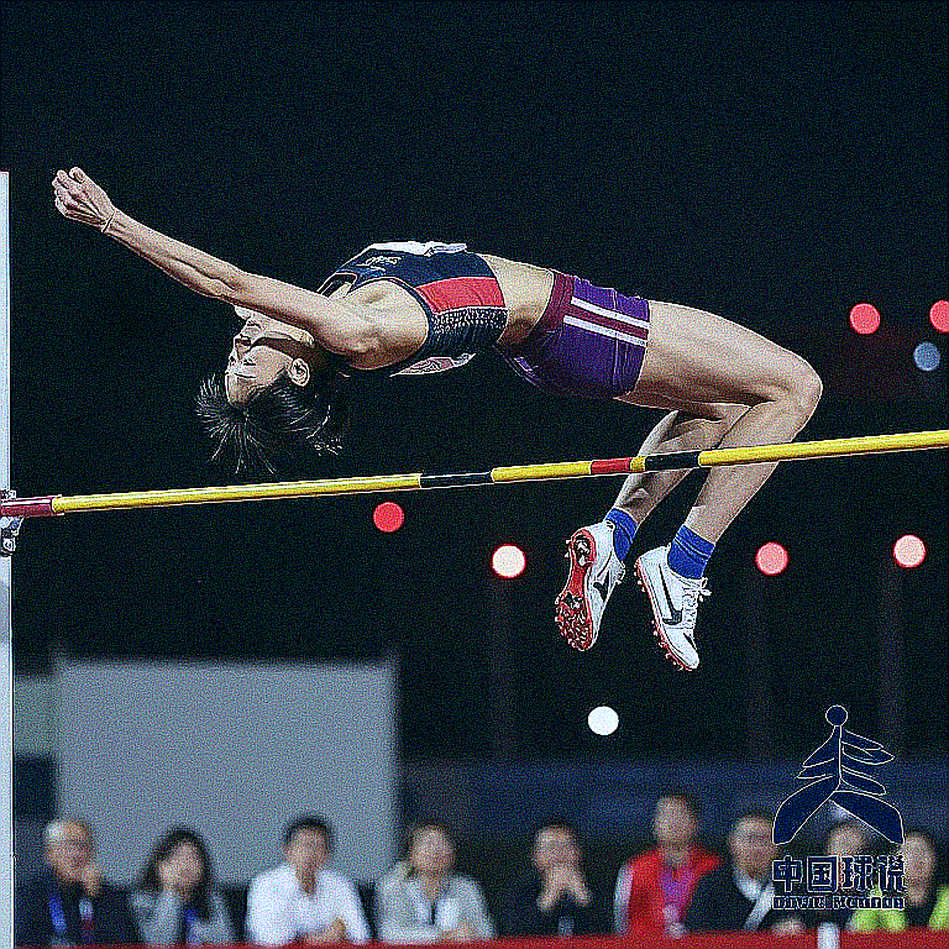
This is the central section. Start with what it says. A fifth place in a women's middle-distance final at a Tier-2 multi-sport championship places Korir in the finals tier. Athletics has an implicit hierarchy: world champion, Olympic medallist, world finalist, continental multi-sport finalist, national finalist. Korir reached the fourth tier. That is a genuine elite result, and at the same time it is outside medal contention. Both are true, and the analyst must hold both.
What it does not say is greater. Because the source provides no time or split, this result cannot be placed on any list — not all-time, not seasonal, not national. We do not know what she ran, where she accelerated, whether she led or chased. In a typical tactical championship final, fifth place is usually decided over the last 200-300m. But usually is not always. Without splits, we do not know which runner type Korir is: a strong closer, a front-runner who faded, or someone who sat in the middle group to the end. Three entirely different tactical profiles, one single fifth place.
This is where I bring in my own viewing experience. Based on my experience watching athletics finals, a placing in a slow final is usually underrated for its tactical meaning and overrated for its performance meaning. Conversely, a placing in a fast final is usually dismissed as just a speed race, when in fact it demands a far deeper aerobic foundation. The same number five, two opposite stories. A reader of the results sheet cannot see that difference, because the results sheet only records the placing.
So if forced to price this placing, where do I put it? On the scale of competitive weight relative to event tier, Korir's result sits above average. The reason is not that the Commonwealth Games is too hard, but that she achieved it from inside the deepest talent pool in world athletics. A Kenyan athlete reaching a middle-distance final at an international meet has passed through a filter that many European or American athletes never face. That filter does not appear on a timing board, but it exists.
Here I have to speak about my own trade. In the betting market, an athlete like Korir is an awkward problem. Pricing models need inputs: personal best, season's best, recent form, head-to-head history, and competition conditions. For Korir, almost all of those inputs are empty. A model facing this profile has only two choices: widen the error margin until it is useless, or lean on some implicit assumption about the athlete's class. Both are methodological failures.
Now to the harder part: the medical condition.
The source states Korir was born with a form of fistula — which must be distinguished clearly from obstetric fistula, far more common in developing countries and usually the result of difficult childbirth. A congenital fistula is a lifelong condition requiring continuous management. By her own account, it causes continuous urine leakage during activity, making training difficult, and forced her to shorten her running distances to reduce the leaking.
Translate that into the language of a data analyst. In the middle distances, aerobic training volume is the foundational variable. You cannot build a 1500m foundation from short runs alone. If Korir was forced to cut long runs short, she was trading specificity and aerobic volume for symptom control. That trade tends to cap the ceiling in longer middle-distance events, and may explain a finals-but-not-medal profile.
I want to be clear: this is a hypothesis, not a conclusion. Its reliability is low to medium, because every fact comes from the athlete's own account, with no training log, no independent medical data, no cross-season volume comparison. But even as a hypothesis, it changes how the fifth place reads. An athlete running slightly below her potential, because of a lifelong biological constraint, is not a lesser athlete. She is an athlete running in a different frame of reference.
And here is the point I most want to stress in this section: an athlete's performance ceiling is set not by talent alone, but by the sum of constraints — physical, medical, social — that the athlete must carry every time she steps onto the track. The results sheet records the outcome of a race, but it does not record the price of being at the start line.
The blind spot: correlation is not causation
At this point, I have to argue against myself.
There is a powerful temptation in this kind of storytelling: to turn the human story into a shield against any rigorous analysis. She was born disadvantaged, so do not scrutinise her numbers. I do not accept that escape. Empathy and precision are not mutually exclusive; they are two different layers of data, and a good analyst must read both.
Conversely, there is a temptation from the opposite side: to use empathy as a variable that blurs competitive reality. In elite athletics, personal hardship does not slow the stopwatch. The stopwatch does not know why Korir shortened a run. It only knows how long she took. And because we have no time, we cannot even compare her with herself last season.
This is where I pull back to my central principle: correlation is not causation. That Korir reached the final and that she has a congenital fistula are two facts that coexist, not a causal chain. We do not know how much the condition limited her. It could be a great deal. It could be very little. She may have built a clever alternative training programme that nearly neutralised the biological constraint. Without data, every conclusion is a guess.
So I do what I always do when data is missing: I widen the error margin rather than narrow it.
There is one detail in the source I cannot skip, even though it is a single sentence. Korir said most people could avoid her. Read as a social datum, it suggests she trained and competed without a full support network — no stable training group, no team structure to lift her. In the middle distances, the training group is part of the performance infrastructure: the pacer, the puller, the one who pushes you through sessions that seem impossible. An athlete without a training group runs at a higher structural cost than her peers, even if on paper the two are equal.
I call that hidden value in reverse. Not a player undervalued by a market that has not yet noticed. Rather an invisible cost that the results sheet does not subtract. Every athletics comparison implicitly assumes two athletes share the same baseline conditions. They do not. Korir is living proof of that false assumption. When data speaks, laughter is only noise. But there are silences data cannot fill, and that is exactly where tactical truth resides.
Signals for the next cycle
So what are the signals for the next cycle?
With Korir, I will not look for a higher placing at the next meet. I will look for the missing data: year-by-year personal bests, this season's best, and most importantly, whether she actually runs the 1500m or the mile. Those three numbers will re-price the entire story. If she has a steadily rising personal-best curve while managing a lifelong biological constraint, then she is not a touching story — she is an optimisation problem worth studying.
For those who read results sheets, I want to leave one reminder. Every laugh is an unlabelled data column. And so is every gap in a record. Where there is no number is not where there is no story; sometimes it is exactly where the most important story lives.
In the meeting room, emotion asks and data answers. But there are questions data cannot answer, and those are precisely the questions most worth asking. I do not predict the track; I measure the distance between expectation and the finish line. With Naomi Korir, that distance remains open. Not because she lacks the talent to close it, but because we were never handed the ruler to measure it.