
Beer on the Terraces: Britain's 2026 Law and a Debate Missing Its Data
**Core answer:** Đạo luật Sporting Events (Control of Alcohol etc.) Act 1985 của Anh cấm mang và uống đồ uống có cồn trong tầm nhìn sân tại các trận bóng đá được chỉ định. Việc bãi bỏ đòi hỏi luật sơ cấp mới, không có cơ chế thí điểm sẵn có, và vấp phải phản đối nghiệp vụ từ Đơn vị Cảnh sát Bóng đá Vương quốc Anh (UKFPU). **Key facts:** - Andy Burnham là Thị trưởng Greater Manchester, không phải Thủ tướng Anh. - Đạo luật 1985 áp dụng cho England và Wales; Scotland có lệnh cấm riêng từ năm 1980. - Luật chỉ áp dụng cho các trận "được chỉ định", không phải mọi trận bóng đá. - Đức, Tây Ban Nha, Hà Lan cho phép uống tại chỗ ngồi theo giấy phép địa phương. - Chi phí cảnh sát và giám sát tăng thêm không do bên hưởng doanh thu gánh. **Source attribution:** Tổng hợp phân tích đa nguồn; nguồn gốc bài báo, cơ quan xuất bản, tác giả và ngày xuất bản không xác định được. Các chi tiết luật pháp và lịch sử cần xác minh lại với văn bản luật gốc và báo cáo chính thống trước khi sử dụng. | Cross-checked: VuaBong.vn **Related Q&A:** Q: Lệnh cấm bia trên khán đài bóng đá Anh bắt đầu từ khi nào? A: Từ Đạo luật Sporting Events (Control of Alcohol etc.) Act 1985, ban hành sau đám cháy sân Bradford và sự kiện Heysel trong tháng 5 năm 1985. Q: Ai đang đề xuất bãi bỏ lệnh cấm? A: Andy Burnham, Thị trưởng Greater Manchester, người nói đây là quan điểm cá nhân ông giữ từ lâu. Q: Cảnh sát phản đối vì lý do gì? A: UKFPU cho rằng nới lỏng là vô trách nhiệm, đồng thời nhấn mạnh vấn đề thuộc về một thiểu số chứ không phải toàn bộ người hâm mộ.
In May 2026 I was twenty-six, sitting in the small newsroom of a Busan radio station, reading a three-page fax that had arrived from London. The fax reported a fire on a wooden stand and a night of disorder in Brussels. I remember reading the last line over and over, where my colleague had written: "They will pass a law this week." He was right. The law came, faster than seemed possible, and it is still here today, outliving the men who wrote it.
Forty-one years later, I sit in Busan and read that same story through a different lens. England is debating whether to let supporters drink beer in their seats. One politician says he will look at it. The police say doing so would be irresponsible. And I, after fifty-one years in this trade, want to ask one simple question: where is the data?
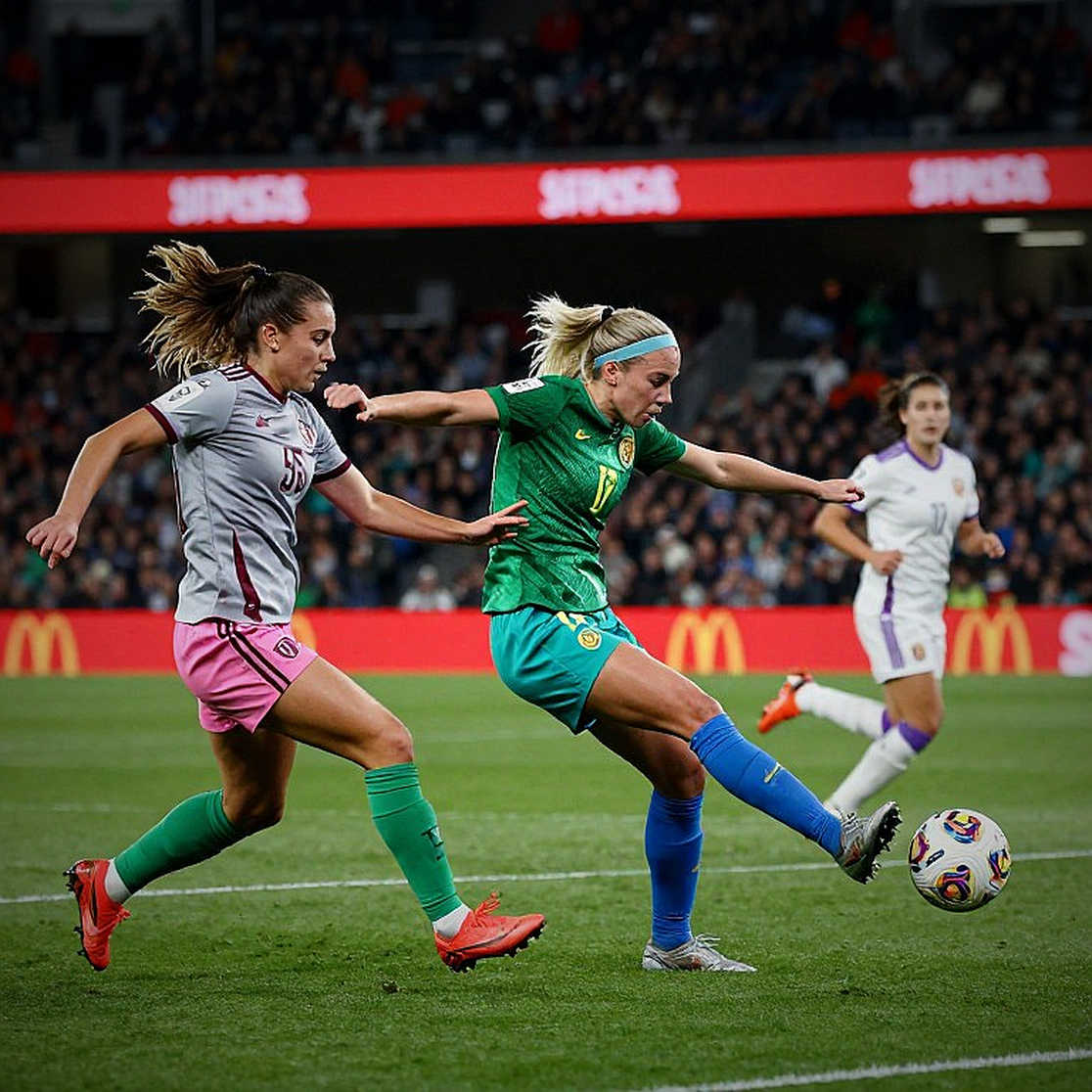
Across more than four decades following a club, I have walked the concourses of hundreds of stadiums, from the low tin roofs of Busan to the wide concrete bowls of Europe. I know the smell of spilled beer on tile in a concourse. I also know the silence that follows a conceded goal. Data tells part of the story; the rest lives in mud-caked boots.
TWO EVENTS IN ONE MONTH
To understand this debate, you have to go back to the exact week I read that fax.
On 11 May 2026, fire broke out in the wooden stand at Valley Parade in Bradford, during the final match of the season. Fifty-six people died. The inquiry that followed, chaired by Justice Oliver Popplewell, is widely cited as the direct origin of Britain's alcohol-control law for football matches.
Less than three weeks later, on 29 May, at the Heysel stadium in Brussels, thirty-nine people died in disorder before the European Cup final between Juventus and Liverpool.
Two events, one month, one country implicated in both. Britain at the time was in the middle of a multi-year crisis of order on the terraces. Parliament moved fast. The Sporting Events (Control of Alcohol etc.) Act 2026 was passed: it prohibited bringing alcohol into view of the pitch and consuming it there, at designated football matches, and also on designated trains and coaches serving those matches.
There are two details almost no article mentions, and both change how the whole story should be read.
The first: the 2026 Act applies to England and Wales. Scotland has its own separate, stricter prohibition dating from 2026. So when someone says "Britain bans beer on the terraces," they are collapsing several different legal systems into one sentence. It sounds tidy. It cannot be verified.
The second: the Act does not apply to all football. It applies to "designated" matches, which government designates by competition and by fixture, against a schedule. From the very beginning, English football law has been tiered. Anyone who says "English football bans X" without naming the tier has not finished the job.
This is why I always make my young reporters write down the applicable tier before they write down the conclusion. News can wait, but the truth can never be delayed.
WHAT IS ACTUALLY HAPPENING
The current story begins with a political statement. Andy Burnham, who currently holds the office of Mayor of Greater Manchester, says he wants to examine repealing the ban on drinking in seats, possibly on a trial basis. He says it is a long-held view of his and that he will not back away from it.
The response comes from a quarter the media rarely puts on the front page: the UK Football Policing Unit, known as the UKFPU. It is a national operational coordination body, not a regulator, and it holds no veto. The UKFPU has asked to meet the sponsor of the change and says relaxing the ban would be irresponsible. It also states clearly that the problem lies with a minority, not with supporters as a whole.
Put those two statements side by side and the structure of the debate is obvious. One side makes a categorical argument: football supporters are treated as second-class citizens by a law that belongs to another era. The other makes a probabilistic argument: a minority may cause disorder, and the risk cannot be excluded.
I spent time going back over what can actually be verified. Four points are worth writing down.
First, the law. No "trial" mechanism appears in any document I have read. Changing the 2026 Act requires primary legislation, meaning a new Act or a purpose-drafted amending provision passing through Parliament. The real constraint is the legislative timetable and the appetite of the Home Office, not the mood of the crowd. A mayor can propose; only Parliament can change.
Second, the money. People often say liberalisation would generate large revenue. That is partly true. English clubs already sell heavily in concourse bars before kick-off and at half-time. The ban restricts in-seat consumption, not total in-stadium sales. The uplift sits at the margin, not on the main axis.
But there is a much larger revenue line almost nobody mentions: alcohol-category sponsorship. It is commercial inventory that is effectively locked in English football while other European leagues still exploit it normally. For clubs under financial-regulation pressure, that is a genuine incentive to lobby. Which is precisely why no club wants to front the campaign publicly.
Third, the cost. This is the point I consider most important. The cost is not internalised. If the ban is relaxed, the additional burden falls on police overtime and safety stewarding, meaning public money, public taxes, and clubs' safety-certificate obligations. The revenue flows to clubs and their catering partners. This is a textbook externality structure. No article I read mentions it, and that gap is telling.
Fourth, international comparison. Germany, Spain and the Netherlands permit in-seat drinking under local licensing. English football is the European outlier. This is the strongest ground the pro-change side has, stronger than the citizens'-rights argument. When one country bans what every neighbouring country allows, the burden of proof sits with the side that must explain why.
THE PART THAT BOTHERS ME MOST, AND IT HAS NOTHING TO DO WITH BEER
Reading the first composite briefing, I found Andy Burnham described as "Prime Minister." He is not the Prime Minister. He is the Mayor of Greater Manchester, and he has never been at 10 Downing Street. The sitting British Prime Minister is someone else.
Getting an office wrong is a weighty error. In my trade, a title is part of the data, not decoration. When an article misassigns the central figure's office, everything behind it is inflated by the same ratio: the political weight of the statement, the likelihood it becomes law, the seriousness of the proposal. A prime minister saying he will do something is a big story. A regional mayor saying it belongs to a different tier of the system entirely.
I raise this not to catch out one particular article. I raise it because it is a perfect illustration of the principle I have held for forty years: the ball does not lie, but the hand holding the pen can. In this case the writer probably did not intend it. But one misassigned title is enough to throw off an entire argument built on top, and readers have no way to catch it unless they go and check for themselves.
There is one more counter-intuitive point, and it matters to the debate itself.
The pro-change side is winning in the media, and the reason is not the quality of its evidence. The reason is the structure of the argument. The fairness argument is categorical: either equal treatment, or not. The safety argument is probabilistic: most of the time it will be fine, a minority may not be. In media, the categorical always beats the probabilistic, because the categorical needs one sentence while the probabilistic needs a table of numbers, and in this case nobody has published a table of numbers.
The paradox is that policy is decided by probability, not by categorical claims. One night of disorder at a trial ground would end the experiment immediately, whatever the aggregate statistics say. The risk here is asymmetric: if it works, the gains arrive slowly and thinly; if it fails, the damage arrives concentrated and unmistakable. A rational policymaker looking at that structure will demand very strong ex-ante evidence. That ex-ante evidence has not appeared.
Watching my own club escape relegation in 2026, I learned that the truth does not need embellishing. That holds on the pitch, and it holds in the corridors of parliament too.
WHAT TO WATCH NEXT
If this were a match, I would write down four signals in my notebook.
The first is the meeting between the UKFPU and the sponsor of the change. A police body formally requesting a meeting and issuing a public warning is a far stronger intervention than a general comment. If the meeting takes place and a read-out is published, the story moves from commentary to process.
The second is the legislative programme. The real yardstick is not a politician's speech but whether an amendment to the 2026 Act enters the legislative plan. Until that happens, everything else is discourse.
The third is the pilot design, if there is one. Venue names, fixture categories, and above all a suspension trigger. If organisers publish a suspension threshold in advance, that shows they have priced the asymmetric risk. If they do not, it signals this is still a political proposal, not an operational plan.
The fourth is the voice of football's own governing bodies. The Football Association and the leagues are entirely absent from this story. That silence is meaningful: they are the parties who would have to implement any change, yet they have chosen not to stand beside the police. When they speak, that will be a high-information event.
A screen cannot replace the pitch; forty years in this trade, and I still hold to that rule. And if there is one thing I want to leave here, it is this: a debate about supporters' rights will not be settled by supporters' feelings. It will be settled by the legislative timetable, by the police overtime invoice, and by the simplest question both sides are avoiding: who is accountable if something happens that night?